
Surprise pay back ATO

Payroll tax problems

One of the more overlooked areas of taxation is payroll tax. This has caused some very extensive rules to be not properly understood.

The main reason for payroll tax being overlooked is because it is run by the state revenue authorities, not by the ATO. Most people are focussed on the ATO, which sends endless letters and makes endless phone calls and makes itself known and heard.

State revenue authorities are more of a silent assassin. When they hit, they hit big. Think stamp duty when you buy a house. Think land tax on an investment property which eats up your entire net profit. Think payroll tax.

Most people think payroll tax is just for people who have a lot of employees. The threshold at the time of writing is $1.2m. It seems like a lot but consider this:

  • Contractors are included as employees, subject to limited exceptions. That means anyone that you pay on an ABN. It can also include others as well. It is extremely broad, and to give you a sense of how broad, it basically covers everyone unless an exception applies. So you have to go through the list of exceptions to find out who to take off – otherwise they are in.
  • Wages (including payments to contractors) paid by other members of the group are also included, as a group gets only one threshold. Now you might think, that’s fine, I am not in a group with anyone. That would be wrong. You are probably in a group with someone else and you just don’t know it. Two companies can be in a group if they have a common employee. You are probably breathing a sigh of relief and saying thats not the case for you. You would be wrong again. A common employee is someone who does work in your business as well as a different business, even if they are not your employee (or theirs). For example, theoretically if a business sends someone over to yours to do something, and you can direct them and tell them what to do, they become a common employee. Unless the exception for contractors applies, which is a limited list. By the way you are in a group unless you apply to the state revenue office and they agree that you aren’t in a group with someone.

If you are in a group, joint and several liability applies, which means you could be responsible for someone else’s payroll tax.

This is all unbelievable to most people, and you would be thinking if so many people were liable, then when haven’t you heard about it? Thats a good question. The answer is not in the rules – more people are liable than they realise – but in the enforcement. The fact is, the state revenue office doesn’t necessarily have the ability to check this in detail for each person. How would they know if another business sent some over to yours to help out with something?

If you get audited, then all these issues and questions come out. Not to mention some people will desire to reduce their payroll tax bill by trying to push it onto others. The employment agency rules, for example, would allow just that. If someone is the employment agent, then they are responsible for the payroll tax. If they are not an employment agent, then you are. You can see how this could easily go bad. Classic case of game theory.

Adam Ahmed

ATO debt collection cycle

There are a great many people in Australia affected by ATO debt collection at the moment.

Most people would already intuitively feel that the Government tends to be up and down when it comes to debt collection. As someone who is on the coalface of people on the receiving end of these debt collection attempts, I can verify that, at least in my experience, there is a clear cycle, and it goes something like this:

  1. There is some sort of crisis, such as the GFC or Covid, and the Government loosens the purse strings, and also goes easy on debt collection.
  2. Debts balloon. The Government comes to the conclusion that there are a lot of businesses out there that probably should not still be there, and are only there because of generosity or lax collection practices in the past.
  3. Aggressive collection. The Government starts to tell the ATO to collect the debts more aggressively. The Government criticises the ATO for the size of the debt. The ATO starts to collect aggressively.
  4. Economic problems. People start to suffer and scream out. The collection is too harsh. It is affecting the economy. The Government starts to ease up and the generous part of the cycle begins again.
  5. Debts balloon. The generosity results in increased debts. And the cycle continues.

I started this story with a crisis, because that is the genesis of more extreme action. Normally the action is less extreme. There is still a cycle.

I have a client who had paid $50k in interest. I asked the ATO to forgive it, and the ATO said no. I know for a fact that if I had asked the ATO a year earlier then it would have been forgiven. I know this because another client of mine was the recipient of that generosity. Its all about the cycle.

The cycle is a lagging indicator. It takes a while for people to realise that there has been a change and adjust their behaviour.

Today, we are in the aggressive part of the cycle. Its extremely aggressive, which is made worse by automation. The ATO has changed, the world has changed. Now human to human interaction is decreasing and decisions are increasingly made by people based off very limited written information. I make this specific point because, as most people know, most communication is non-verbal. It could be tonal or based on body language. These things make a real difference. An ATO decision maker who is deciding on your written payment plan, who doesn’t know you, has never heard your voice, and knows you only as a number is not going to be making decisions at a human level, but rather a robotic level. The ATO is increasingly robotic, as are all revenue agencies, and the staff are forced to be robotic and operate within limited parameters. While the ATO in general may have great powers, in practice each person working there is extremely limited, and must follow specific parameters and constraints. There is a real effort to stamp out the human element of any interaction, other than to use it to sell you the outcome, which cannot be changed – to attempt to soften the blow so to speak – if any attempt to do so is made at all.

I have found that most success in dealing with the ATO is based on understanding that you are dealing with a robot. Most humans think that if they could just speak to a person, or if that person could understand them, then everything will be OK. They won’t believe that it is any other way – and why would they? They desperately wish that could be true. The reality is, its a system. Each person at the ATO is a bureaucrat with a limited brief and a checklist. There is no real scope to go outside the checklist. The best they can do is listen and offer a comforting ear. They certainly cannot help you if you use this method.

Dealing with a robot has its advantages, and that is it is programmed a very specific way, to do very specific things. Its cause and effect relationship is always the same. Its non-adaptive. Just as no human can intervene to help you, no human will intervene to help the robot initially unless there is a bug that needs to be fixed and that is discovered at a system level. Its just you vs. the robot. The predictable robot.

The robot makes errors. The ATO was sending out statements of clam en masse to people. There was no human involved in them other than superficially. We decided to defend one, and it forced the allocation of a human on the ATO end because someone needs to turn up to Court, and the human realised there was an error and the ATO was forced to back down and pay our legal fees. The robot executed the function perfectly, it copied the template perfectly, its just the template was wrong when applied to our clients particular situation.

The same issue with director penalty notices and all of these other mass one size fits all solutions to individual problems. There is always a gap. The computer basically relies on people not knowing how to respond or what to do – basically just roll over or bury your head in the sand. But if someone decides to challenge the computer, especially in a unique way, you’ll find it doesn’t know how to fight back.

Cash flow boost review or object

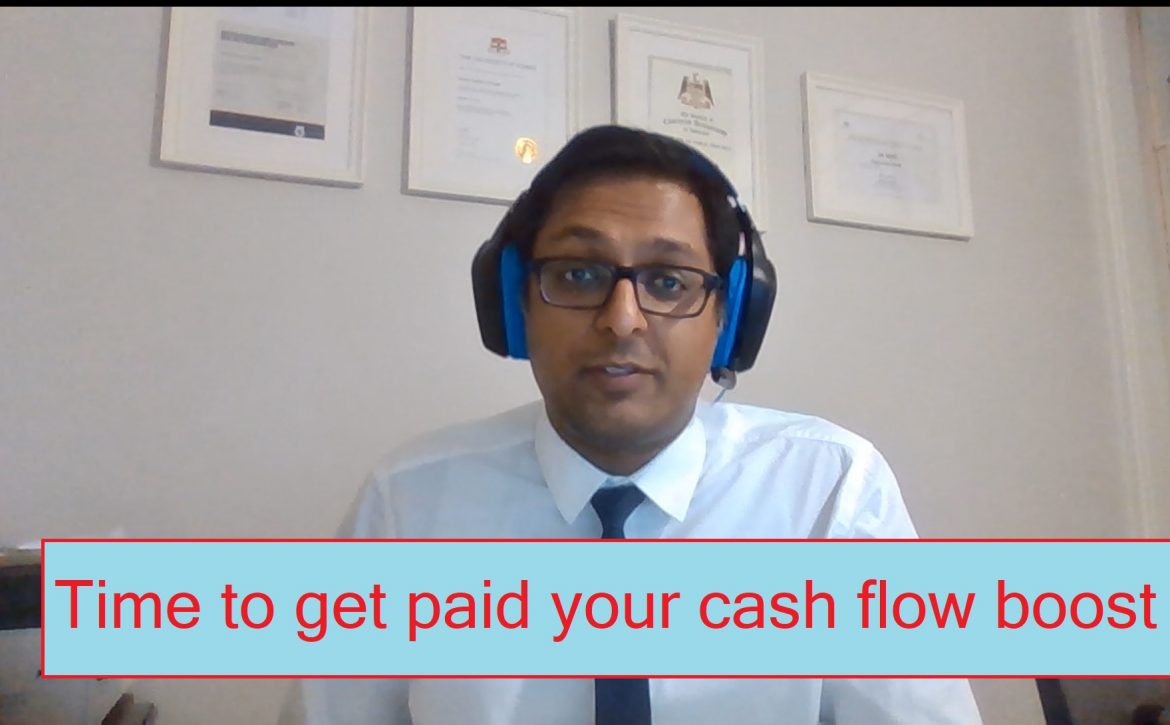
Cash flow boost refused? Video on what to do

Top tax lawyer gives 3 tips on what to do if your cash flow boost has been refused or isn’t coming through:

Hope this video helps. Best of luck!

Contact number is 02 7200 8200 and email is adam@adamahmed.com.au if you need it

david-1

3 Tips to get the ATO to pay you your cash flow boost or jobkeeper – objection or review

The Government recently introduced the cash flow boost for pretty much everyone who has employees.

A lot of people got it, but some people missed out for various reasons, usually a technicality of some sort or just a processing delay. What is interesting is the ATO doesn’t seem to be applying the law correctly. Many people meet the requirements of the legislation, but the ATO refuses to pay them.

Are you one of these people?

Its tough to see other competing businesses get the money when you don’t, especially when you need it too. Especially when you have done the right thing, are hiring staff and helping keep the economy afloat.

Fortunately (or unforutnately) this is a common problem.

Step 1 – identify the REAL problem

For example a common one is that you didn’t have PAYG registration before 12 March 2020. This is not actually a requirement of the law and the ATO has acknowledged as much on their website. When the ATO is asking you for information about paying employees before 12 March 2020, what they are really asking you is if you have tried to fraudulently claim the cash flow boost. Its a different question, but its important, because you can’t answer the REAL question if you don’t know what it is.

Step 2 – Talk to a person

The ATO is completely overwhelmed by calls and new legislative changes right now. They are building automated processes which allow a quick burn and churn. Whilst that will help most people, it won’t help you if you have a unique situation. The person with a chun and burn mentality cannot look into or understand the nuance. You need to try to talk to someone. Impossible? Not really, there are a lot of administrative maneouvers you can try and that will work. Find out what these are and use them.

Step 3 – Hold your ground

If you qualify, you need to be paid. There isn’t much more to it. Make sure you go through the requirements of the LAW (not just the ATO website). If you meet the requirements, then you are entitled to be paid.

The phone of the firm in the video is 02 7200 8200 or email adam@adamahmed.com.au

I

We have prepared a template for cash flow boost, a template for jobkeeper (employee) and jobkeeper (eligible business participant) to help you go through the requirements of the law and identify whether you are eligible. It comes with a free 15 minute consultation with a tax expert if you need it. Best of luck, we hope you can get your boost.

X